Sunday, September 22, 2013

Public Art in Greensboro Assignment Information


ART 100: Introduction to Art
Instructor:  Harriet Hoover
Fall 2013

Project 1:  Public Art Proposal

Project overview
Students will research contemporary public art and create a proposal for a public artwork on NC A&T campus or in the Greensboro metropolitan area.  Students will learn about the wide spectrum of public art including: traditional and abstract sculpture, performance and socially engaged works of art, and time based media installations.  Based on their research of Greensboro’s history and the relevance of art in the public sphere, students will design, ideate, and create a physical mock-up of a proposed work of art.

Contemporary Artists/Organizations to research:
Jeanne-Claude and Christo
David Hammonds
Claus Oldenburg
Pablo Helguera
Paul Ramirez Jones
Jenny Holzer
Jeff Koons
Maya Lin
Richard Serra
Robert Smithson
Louise Bourgeois
Mel Chin / Safe House: http://melchin.org/oeuvre/render
Thomas Demand
Philadelphia Mural Arts Program
New York Public Art Program: http://www.nycgovparks.org/art
Art in Odd Places: www.aiop.org

Key dates to remember:
October 1: Assignment 1 due (research + proportionally correct drawings due)
      Field Trip to the Weatherspoon Art Museum
October 10:  Assignment 2 due (site study using perspective)
October 17: Assignment 3 due (initial sketches for a public work of art)
October 31:  Assignment 4 due (physical mock-up of public work of art due)
November 1st and 2nd: A&T Homecoming weekend + Art in Odd Places Greensboro
November 14:  Final drawings due

Step 1:  Research public art, contemporary artists who make public art, discover/draw/take field notes from a work of public art in Greensboro.
First, you must identify what constitutes “public art”.  Research text and Internet resources.    Find a work of public art on campus or in the Greensboro area.  

Assignment 1 (Due Tuesday, October 1): 
·       At least 1 page written text of your public art research and information on your chosen public artwork.  Answer the following questions: Who made the work? What is the medium (media), dimensions, and date it was created?  Does the work commemorate an event?  How is it relevant to Greensboro’s history?  How does the public interact with the work?  Please send your written analysis via email to Ms. Hoover at hhoover@ncat.edu by Tuesday, October 1 at 5 pm.  Papers should be double spaced, 12 point, Times New Roman Font.
·       Create a drawing of the sculpture you are studying.  This must be a proportionally correct drawing of the sculpture/work of art using modeled line.  You may take pictures of the work and draw from the image.  This must be done on an 18x24” piece of drawing paper using media of your choice (ink, graphite, or charcoal).  Turn this in to Ms. Hoover on Thursday, Sept. October 1.

Step 2:  Select a site to propose a public work of art
·       You will select a site on NC A&T campus or in the Greensboro metropolitan area.  Things to think about: What is the significance of the space?  Who will interact with the work in that space?  Does the space itself have historical significance?
Assignment 2:  Create a detailed perspective drawing of the space you plan to propose a public work of art.

Assignment 2: Using, one point or two point perspective, create a site study of where you would like to propose a public work of art.  This drawing must be done in graphite, on 18x24” paper.  You must use the rules of linear perspective to create a representative site analysis.  Due on October 10.

Step 3:  Initial sketches of proposed work of art + physical mock-up of proposed art work
·       Inspired by the list of contemporary artists provided, students will begin to design and plan what their work of art will look like.  Students will create 3-4 drawing of multiple angles and points of view, thinking about materiality, scale, and form.  Due October 17. 
·       Students will also make a sculptural mock-up of their work of art using cardboard, found objects, and other materials that are available to them.
Due October 31.

Step 4:  Final Drawings of your proposal
·       Students will create multiple drawings to present to the class and Art Department. Drawings will covey the following: exploration of the work of art in context to the site and the public, exploration of materiality and the principals of design, convey historical relevance and conceptual contextualization, research installation and methods of construction. 
                   Due November 14.


http://www.greensboro-nc.gov/index.aspx?page=1778

Monday, September 16, 2013

Using your pencil for visual measurement + sighting angles

from R. Stanfest's blog: http://mccdrawing.blogspot.com

++++++++++++++++++++++++++++++++

Using Your Pencil + Thumb to Find Measurements, Proportions and Angles

You can estimate proportions and then check them with a fair degree of accuracy by employing what is called the thumb-and-pencil method of finding proportions. This is done by simply placing your pencil or pen in your hand and then holding it at arms length between your eye and the object that you plan to draw. Here is how:


(1) Hold your body rigid and extend your dominant arm (usually the right arm), pencil in your hand, to its full length.
(2) Place your thumb against the pencil as a gauge (sliding it up and down or to the left or the right, depending on the unit of measurement you wish to establish).

(3)Bring the pencil on a line with your eye and the object that you are measuring.
(4) Try to find one part by which you can then measure the rest of the object. In the diagram above, the head is used as a unit of measurement to determine the length of the subject's body. This is done by aligning the tip of the pencil with the edge of the snout, and the thumb is resting on the pencil to where the head ends at the start of the neck. The tiger above is thus, six heads in length.

(5) Once you find a part to which to measure the rest of the parts of the object, you can then proceed to put in the object’s details, still using the same scale of measurement in which you established.
An example of how to use your pencil as a measuring stick to find the height and width of the house with the use of your pencil and thumb. You can also find the angle of the roof with this method. In drawing the house (as shown above), the height of the chimney might be taken as a standard of measurement. Hold the pencil upright, the top on a line with the chimney top. Now move the thumb downwards until the end of your thumb comes between your eye and the bottom of the chimney. Then draw the chimney. Repeat this measuring operation, finding where the length of the chimney corresponds to other parts of the house. Your pencil can be moved between the house and your eye and by using the chimney length as your standard of measurement, the corresponding length and width of the house can be estimated.

With the pencil and thumb measuring technique, you can even find the angle of an object, such as the house’s roof. Just hold your pencil parallel with the object (in this case the roof). Then, without changing the position or angle of your pencil, just bring it down to your paper and make a light stroke indicating the angle.

Likewise, by sliding the pencil up or down so as to increase or decrease its length between the points ‘a’ and ‘b’, (shown above) you will be able to check the height of an object as shown below. The same principle applies for heights and lengths/widths.


Above is a demonstration of the height of a cone being checked, while the bottom demonstrates the width of the cone being checked.

This thumb-and-pencil method of checking is easy to understand once you experiment with it. Be sure, however, that you do not change your position or distance from the model once you have started to check, since distance and position change the appearance and size of any object under study.
OTHER DRAWING BLOGS + WEB RESOURCES


Museums and online collections in North Carolina

The Weatherspoon Art Museum (Greensboro): http://weatherspoon.uncg.edu/collections/
The Nasher Museum of Art (Durham): http://emuseum.nasher.duke.edu
The Mint Museum of Art (Charlotte): http://www.mintmuseum.org/art/collections
The Bechler Museum of Modern Art (Charlotte): http://www.bechtler.org/Collection
Ackland Museum of Art (Chapel Hill): http://ackland.org/collections/
Southeast Center for Contemporary Art (SECCA-Winston Salem): www.secca.org

Tuesday, September 10, 2013

Jacolby Satterwhite

Check out this interview with Jacolby Satterwhite - he's drawing in many different ways, with his body and technology.  His work smart, articulate, and provocative.

http://www.art21.org/newyorkcloseup/films/jacolby-satterwhite-dances-with-his-self/?utm_source=blog.art21.org&utm_medium=referral&utm_campaign=Blog_Sidebar

Monday, September 9, 2013

Modeled Line


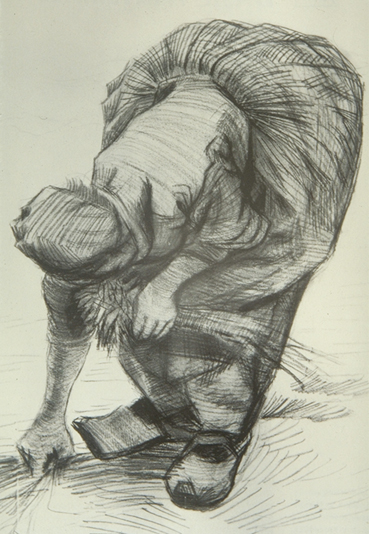
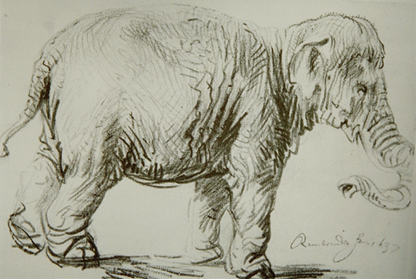
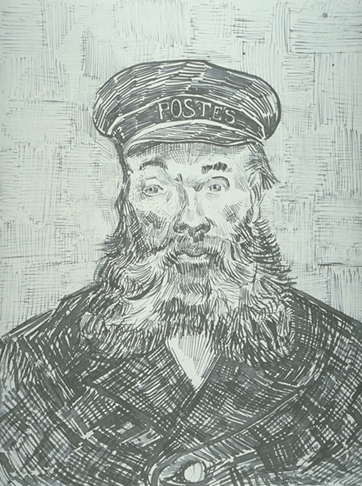
Modeling is a term that drawing borrows from sculpture to a strategy that develops the appearance of the third dimension. When an artist varies line width, weight, and pressure they begin to explore tonality (dark to light), cast shadows, and atmospheric perspective.  For the next two sessions we will be exploreing modeling with line, we'll begin to add value, or tone, to make our drawings richer.  The drawings below exploy modeled line to develop a sense of three dimensionality.  Notice how the artists are not 'shading' or smearing graphite or charcoal to develop tonality.  Rather, they are using hatching, cross-hatching, and building areas with small marks that aggregate to build darker areas.  
Vincent Van Gogh
Cross-Contour: While contour lines describe edges, cross-contours describe form and volume. These lines can follow planes of form, moving around and across objects as well as through them.
Millet

Rembrandt
Van Gogh


Searching Lines: Giacometti and Jason Miurhead both use energetic and vigorous searching lines to build areas of tonality.  Miurhead's directional lines are mirroring the striations of the ways corn grows
Jason Miurhead
Giacometti
Hatching + Cross-Hatching
Giorgio Morandi uses methodical layering of regularly spaced straight lines of unchanging width.
Peter Paul Rubens


Michelangelo Buonarotti


m

Line / Expanded


Look below at the various ways in which artists are using line.  

How do Avigdor Arikha and Kathe Kolwitz use expressive line to convey emotion?
Avigdor Arikha's Self-Portrait, Shouting One Morning, 1969.
Kathe Kollwitz
Kathe Kollwitz
-------------------------------------------------------------------------------------------


Note how Matthew Ritchie and Sarah Sze are drawing in space?


Matthew Ritchie

Sarah Sze. Installation at Venice Biennial, 2013


How is Julie Mehrutu using line and mark making to express elements of architecture, change, ephemerality, and movement?
Julie Mehrutu, Black City, 2001

How is Rashid Johnson using line, shape, movement, reflection, and objects  in his drawings?  Explore more about his work: http://www.high.org/Art/Exhibitions/Rashid-Johnson-Message-To-Our-Folks.aspx

The Shuttle, 2011

Mirrored tile, black soap, wax, books, shea butter, plant, and CB radio